
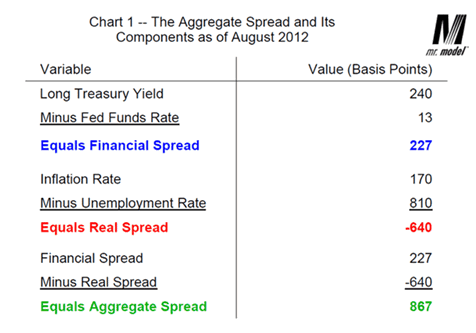
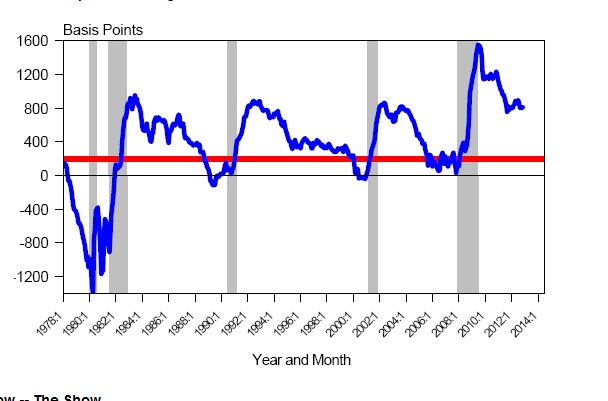
There’s no doubt that rail traffic and other indicators show a weak economy. Later this year the tax increases will also bite. But I like this link from dshort.com on business cycles and his conclusions:
If you have studied the evidence, you will see that recessions usually involve the Fed!
You might also have noticed that business cycle peaks do not typically come from a problem of “stall speed” but one of excess stimulation.
http://advisorperspectives.com/dshort/guest/Jeff-Miller-130111-Business-Cycle-Forecasting.php
Excess stimulation means inflation. You can see the rising and falling of gas prices as a sign of this stimulation. I must agree with dshort as 2008 had high inflation at 5% and 2011 (3.8%) also had a high inflation rate which almost fell to recession. We are now entering a new excess stimulation period (CPI at 1.8% leaves lots of room for stimulation) which should lead to inflation later in the year after the debt ceiling is resolved. Stimulation here is not lending but rather driving cash into the equity markets with a knock-on of increasing corporate and baby boomer spending.
The cycle as I see it:
1) rising inflation
2) inflation level that causes economy stall
3) Fed removes stimulus
4) inflation falls
5) economy falls to recession
6) Fed adds stimulus
1) rising inflation
So clearly the inflation cycle must rise to a high level before a recession can be entertained.
Given the overvaluation levels of the stock market which will be driven higher by the Fed, the bubble will burst likely this year when the Fed removes its ‘excess stimulation.’
 Credit Flow Investor